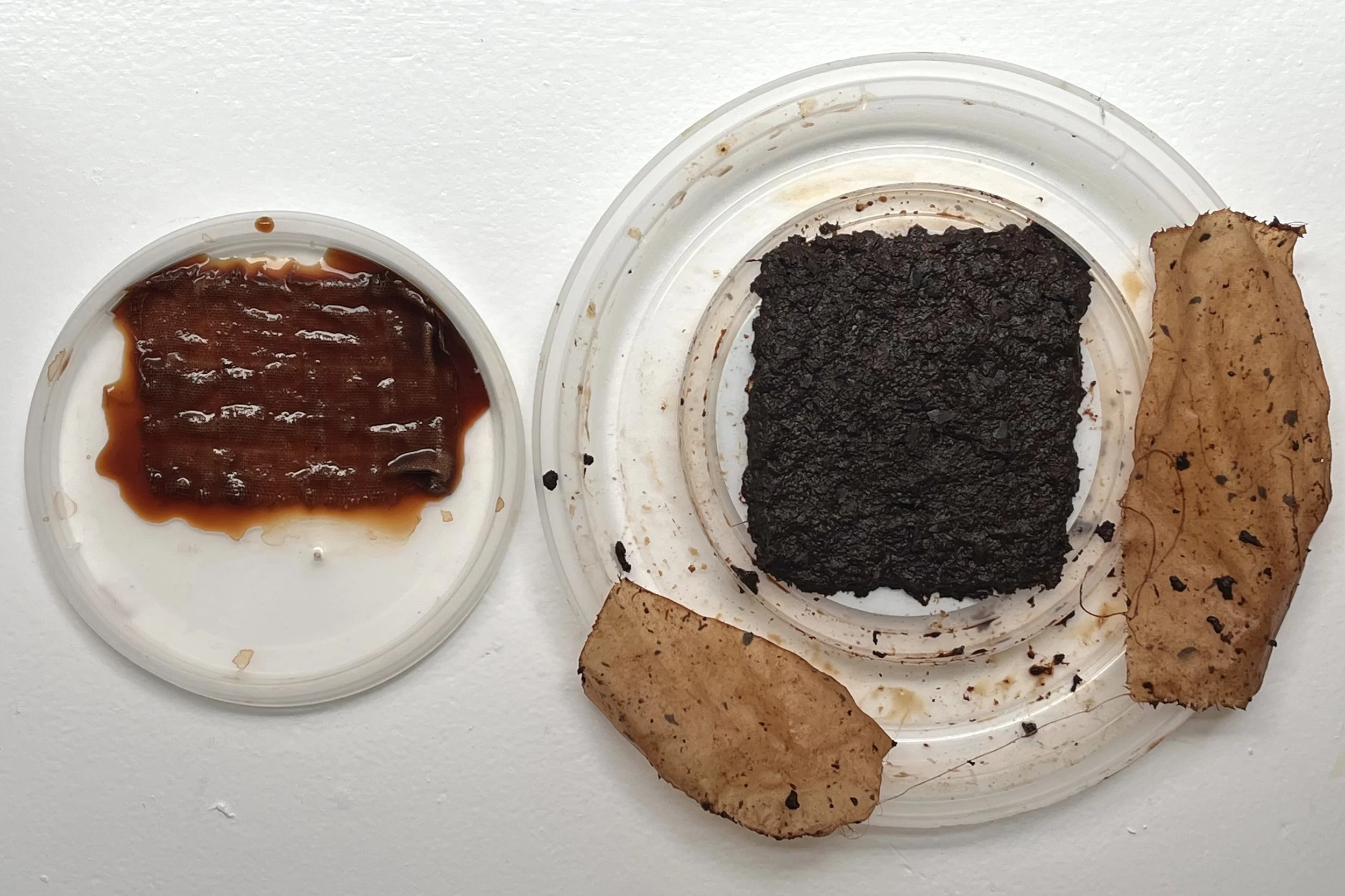
Japanese Knotweed
Japanese knotweed is typically labeled as invasive and aggressive, but this human perspective overlooks its remarkable potential. Native to Japan, China, and Taiwan, knotweed has evolved extraordinary survival mechanisms—its deep rhizomes go dormant when damaged and can break through nearly any barrier. This resilience, combined with its spread across the planet, makes it a powerful material resource rather than simply a problem for humans to control.
My research with knotweed began on a piece of land upstate, where I observed how control-based approaches fail to address the plant's tenacity or recognize its value. Knotweed is edible, medicinal, and rich in antioxidant compounds. Through managed grazing with goats, we created a balanced ecosystem where knotweed provides constant forage while allowing other plants and animal corridors to thrive.
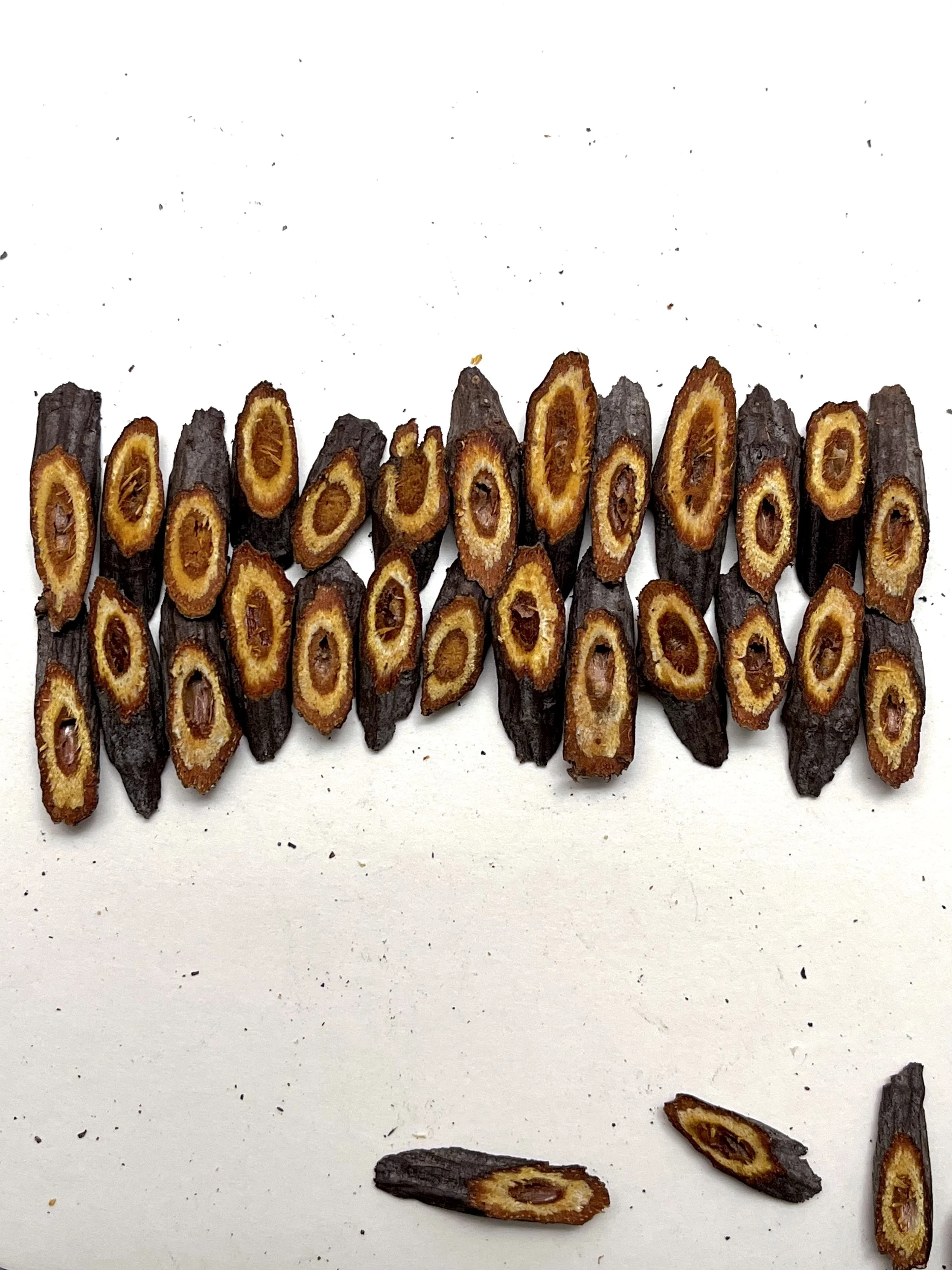
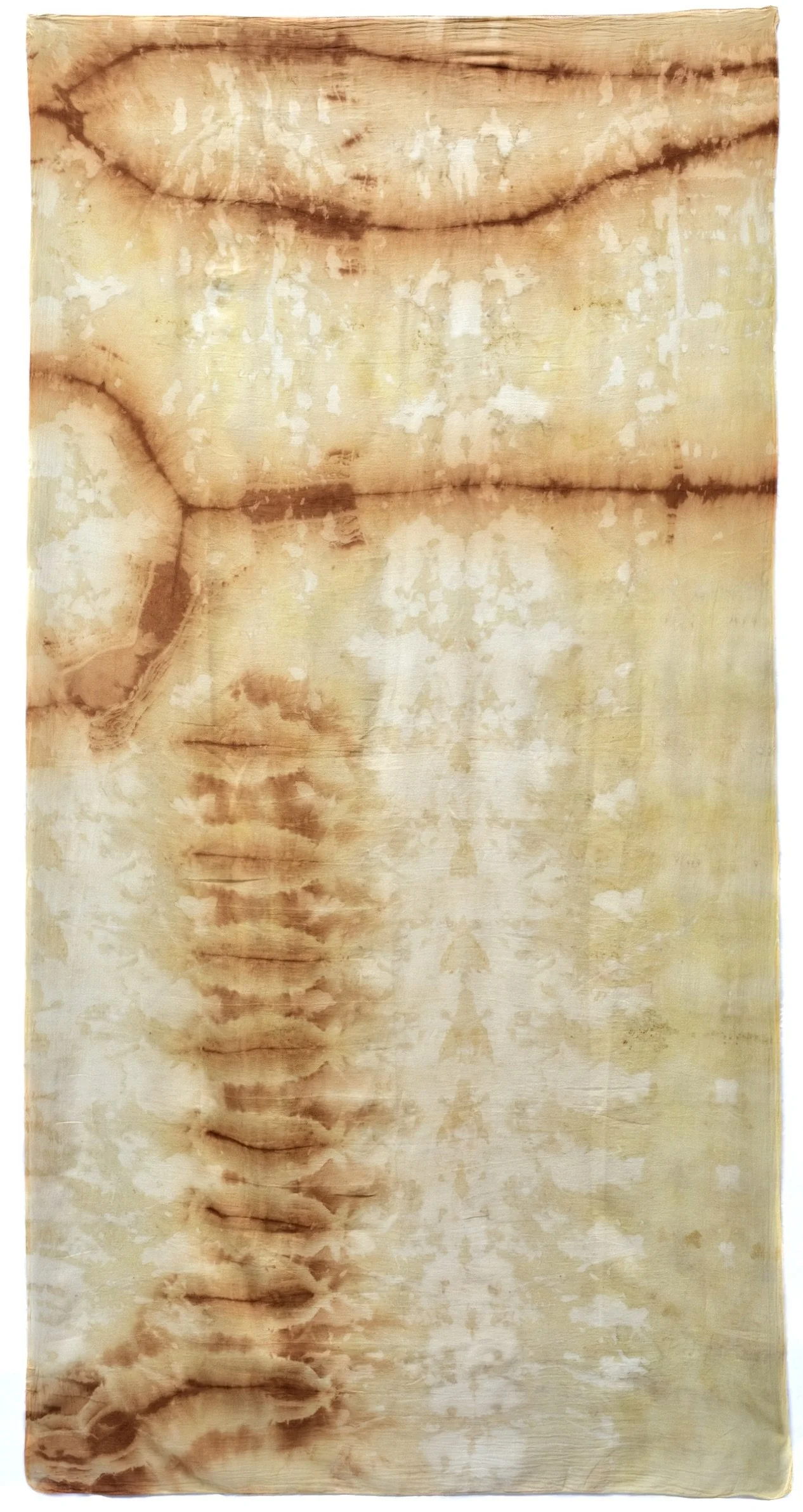
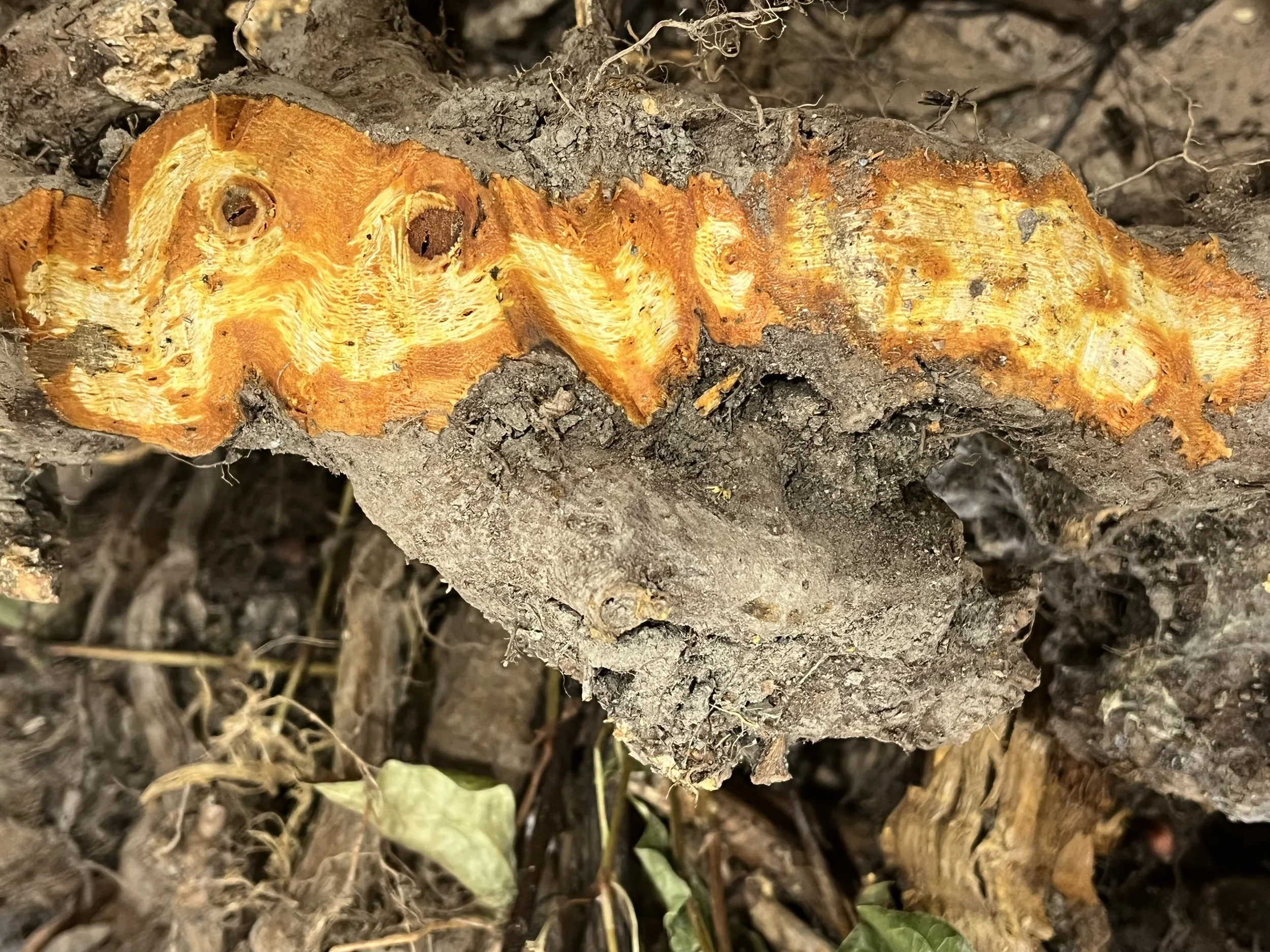
As a dye source, knotweed rhizomes yield vibrant, durable colors with natural antimicrobial properties. This work explores how shifting our relationship with so-called "invasive" species can reveal unexpected material partnerships.